Your on-the-ground partner in Southeast Asia
Run your clinical trial in the Philippines. I connect you to the right CRO.
Faster startup, materially lower per-patient costs, and GCP-quality execution, delivered through local partners.
30–50%
lower per-patient cost
Phase I–IV
hands-on experience
$0
upfront to you
Why the Philippines
The unfair advantage sponsors overlook.
A rare combination of cost, scale, English fluency, and regulatory clarity — the reason smart sponsors are moving trial volume to Southeast Asia.
30–50%
Lower per-patient cost
Run the same protocol for a fraction of US/EU site budgets, without cutting quality corners.
100M+
English-speaking population
A large, treatment-naïve patient pool, cleaner data signals and simpler informed consent.
Faster
Patient enrollment
High-volume urban sites and motivated patients accelerate recruitment and first-patient-in.
GCP
Trained investigators & sites
Experienced, GCP-certified PIs and accredited facilities that global sponsors already trust.
Clear
Regulatory pathway
A streamlined route through the Philippine FDA and ethics committees, navigated with local know-how.
What I do
Three steps. Zero upfront cost. Months saved.
I handle the vendor scouting, screening, & negotiation so you skip months of RFP cycles and land with the right partner the first time.
Tell me your study needs
Therapeutic area, phase, target enrollment, and budget.
I match & negotiate
I shortlist vetted Philippine CROs, run competitive proposals, and negotiate pricing & timelines on your behalf.
Launch with confidence
You sign with the right partner and start your trial. I stay engaged as your local advisor through execution.
No cost to you upfront — I'm compensated on the partner side once you're matched.
The landscape
The Philippine trial landscape, in brief.
The signals global sponsors are watching before they commit trial volume to Southeast Asia, pulled together in one place.
- CostWhy per-patient costs run 30–50% below US/EU sitesA breakdown of site, labor, and overhead deltas that make the same protocol dramatically cheaper to run.Read the insight
- EnrollmentTreatment-naïve populations and faster first-patient-inHow large urban sites and motivated patients compress recruitment timelines versus saturated markets.Read the insight
- RegulatoryInside the Philippine FDA & ethics review timelineWhat the streamlined submission pathway looks like in practice, and where local guidance saves weeks.Read the insight
- Therapeutic focusWhere oncology, infectious disease & vaccine sites are readyA view of therapeutic areas with the deepest investigator experience and accredited facilities.Read the insight
- MarketSoutheast Asia’s rising share of global trial volumeWhy sponsors are diversifying geographies, and where the Philippines fits in the regional shift.Read the insight
Why work with me
I know both sides of the table: sponsor economics and local execution.
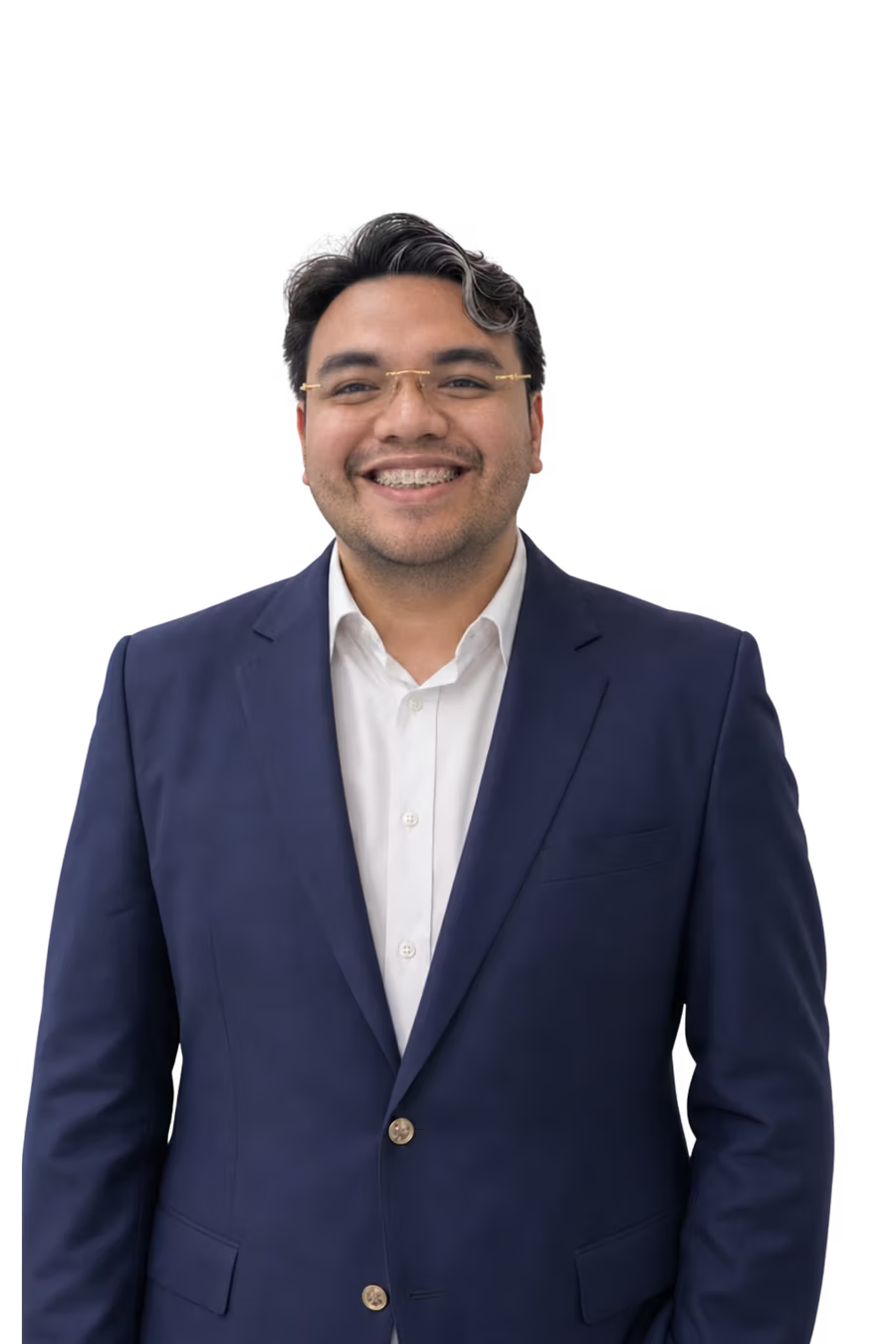
As a Clinical Lead at a Philippine CRO, I manage studies from feasibility through closeout. At BPIQ / BiopharmIQ, a U.S.-based biopharma intelligence company, I analyze clinical catalysts, regulatory milestones, financings, and M&A. This dual perspective helps me align sponsor strategy with effective local execution.
- Phase I–IV & non-interventional study operations
- Regulatory submissions, site management & sponsor comms
- ICH-GCP-aligned quality systems & SOPs
- Biopharma intelligence, clinical catalysts & market analysis
Planning a trial in Asia? Start with a 30-minute conversation.
Tell me a little about your study. I'll come back with a realistic view of cost, timeline, and the partners worth talking to, with no obligation.
- Free, no-obligation consultation
- Response within 2 business days
- Confidential — your protocol stays yours